Property rentals and service charge statements
Connect tenancies, supporting documents and advance payments into a traceable service charge statement.
Follow the design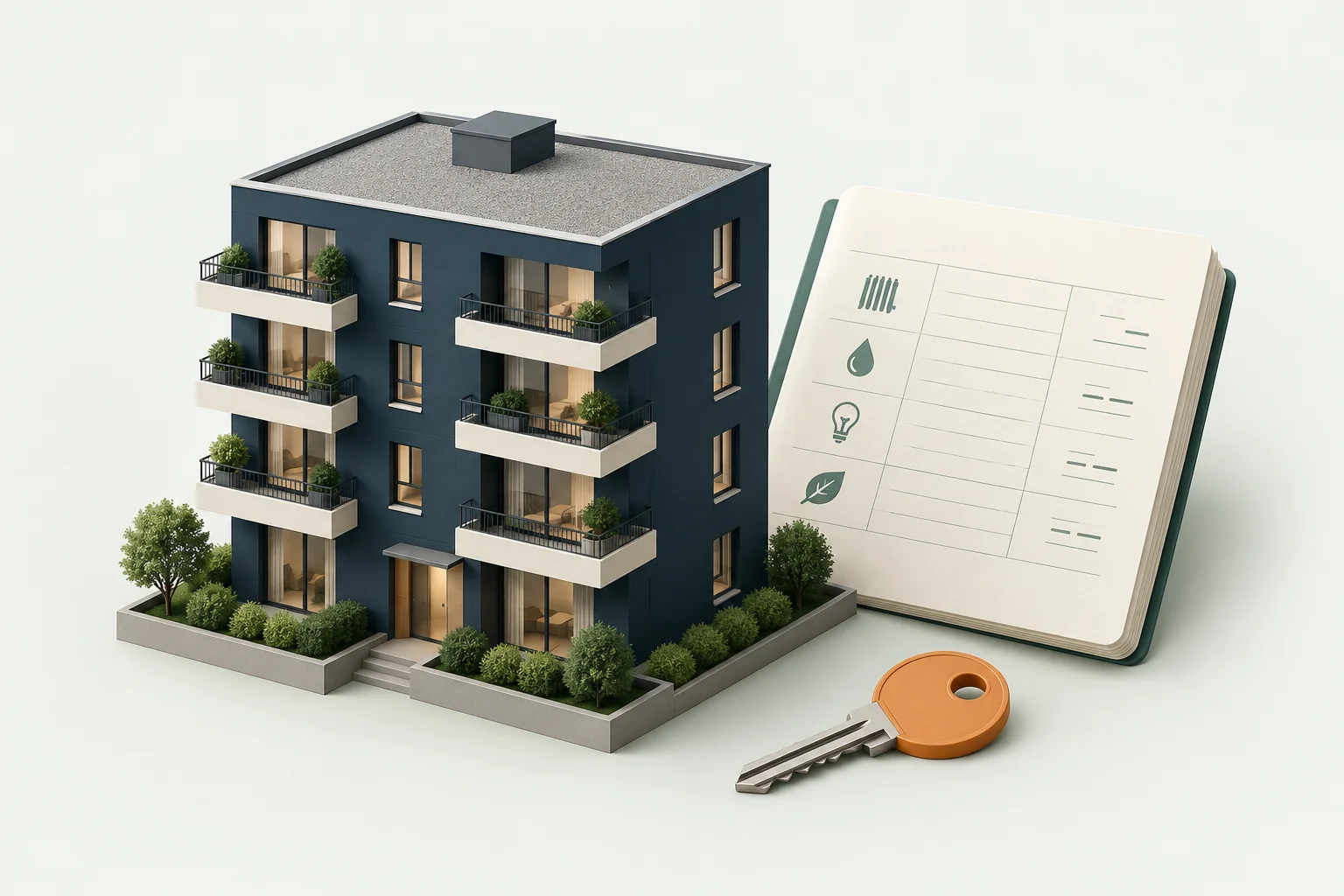
Business workflow
Property management allocates costs to a building and accounting period. Tenants receive a transparent statement and can inspect supporting documents. Accounting reconciles receivables and payments separately.
These questions are answered by the case
- Fictitious design for a house, a completed annual period and a contractually specified area key. The application documents released billings and correction versions; the legal examination of individual costs remains with property management.
- The signed amount due equals the allocated cost share minus advance payments already accounted for. A separate immutable payment ledger records only additional positive payments received later. Outstanding balance = current amount due minus the sum of these additional payments. A positive balance is the remaining amount due, zero means settled, and a negative balance is a credit equal to its absolute value. Corrections replace the amount due, retain all payments and post only the difference from the previous amount due. They remain permitted after settlement and for credit balances. Actual positive payments are accepted and deduplicated even when they exceed the remaining amount due or arrive after settlement. Advance payments are not counted again in the additional ledger. Refunds are outside this case; a credit documents a balance and does not receivable a payout.
These questions remain open
- Heating-cost allocation, tenancy-law advice and automatic court enforcement.
- Owner's accounting and tax calculation.
- Automatic payout of existing credits; handoff to a separate refund process is documented.
Collecting costs
Assign supporting documents and rental periods.
Checking the accounting
Calculate and release distribution.
Delivery and settlement
Provide document and assign payments.
Domain subsystems and their interactions
Property management is responsible for document allocation and release; the accounting department is responsible for payment settlement. Document delivery provides its own proof.
Property management allocates costs to a building and accounting period. Tenants receive a transparent statement and can inspect supporting documents. Accounting reconciles receivables and payments separately.
Leases
Tracks dwelling areas and validity periods.
Described in the designCost allocation
Assigns receipts and allocation key to a period.
Described in the designStatement approval
Freezes calculation status and receivable atomically.
Described in the designAccess to documents
Provides approved document versions.
Described in the designPayment reconciliation
Connects payments and receivables and resolves differences.
Described in the design
Domain responsibilities
Property management is responsible for document allocation and release; the accounting department is responsible for payment settlement. Document delivery provides its own proof.
Tracks dwelling areas and validity periods.
Assigns receipts and allocation key to a period.
Freezes calculation status and receivable atomically.
Provides approved document versions.
Connects payments and receivables and resolves differences.
Practical examples
- BGB § 556 · Agreements on operating costs ↗
Domain reference for billing and document inspection; no source for the fictitious amounts or the designed architecture.
Fictitious design for a house, a completed annual period and a contractually specified area key. The application documents released billings and correction versions; the legal examination of individual costs remains with property management. All quantities, thresholds and operational targets are illustrative assumptions. The signed amount due equals the allocated cost share minus advance payments already accounted for. A separate immutable payment ledger records only additional positive payments received later. Outstanding balance = current amount due minus the sum of these additional payments. A positive balance is the remaining amount due, zero means settled, and a negative balance is a credit equal to its absolute value. Corrections replace the amount due, retain all payments and post only the difference from the previous amount due. They remain permitted after settlement and for credit balances. Actual positive payments are accepted and deduplicated even when they exceed the remaining amount due or arrive after settlement. Advance payments are not counted again in the additional ledger. Refunds are outside this case; a credit documents a balance and does not receivable a payout.