Rental and sharing system
Make vehicles available, enable their use and bill reliably.
Follow the design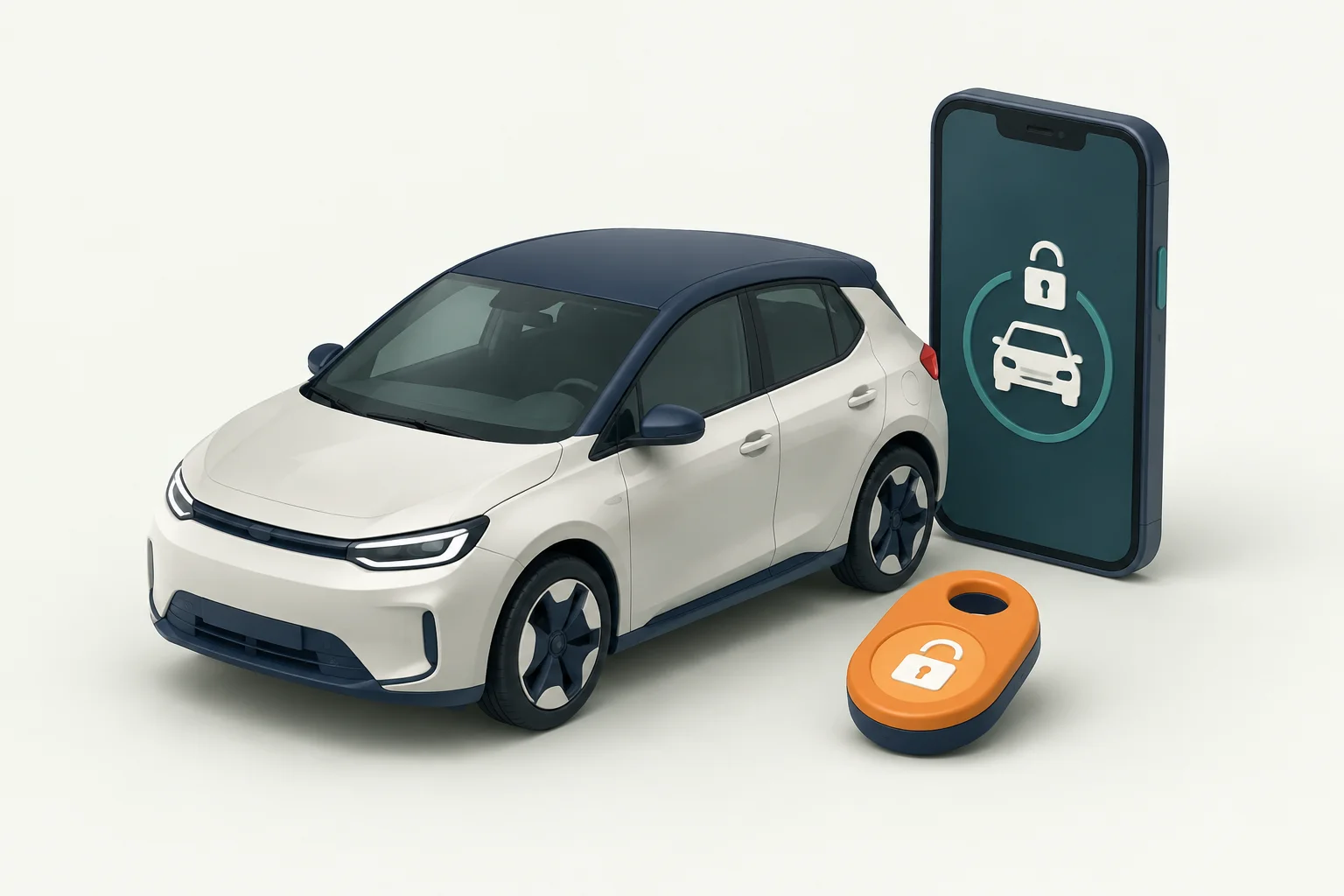
The system organizes the vehicle rental.
People gain time-limited access to a vehicle. The operator coordinates scarce availability, checks eligibility and connects reservations, handover and billing.
Finding and booking
Select vehicle, confirm authorization and reserve use.
Take over and drive
Access and use the vehicle in the booked period.
Return and settle
Complete the use and determine the actual costs.
Domain subsystems and their interactions
The rental application connects five domain subsystems. Their names correspond to the list of linked subsystems. For identity verification, there is already a catalogue entry.
Access for customers
Availability and Booking
Assigns vehicles and periods and holds reservations binding.
Described in the designPayment and settlement
Processes payment requests and bills for usage.
Described in the designVehicle access
Releases the booked vehicle for use.
Described in the designNotifications
Sends confirmations and updates to the people involved.
Described in the design
Business models
The models distinguish how vehicles are provided, booked and billed. A provider can combine several variants.
A vehicle or class is booked for a time window. Pickup, return and contract duration determine the workflow.
A fleet of vehicles is used by different people one after the other. Reservation, current location and return must match. The return is made depending on the offer at a station or within a service area.
A vehicle is available over several billing periods. Recurring installments, terms and extension or return rules complement the rental process. Depending on the contract, the subscription continues automatically or ends on an agreed date.
Practical examples
- SIXT ↗
Practical example: rental offer and reservation
- MILES ↗
Sharing example mentioned by the user; conditions not checked
- SIXT+ car subscription ↗
Car subscription with recurring billing. Current contracts end after a fixed term; older contracts with a minimum term continue on a monthly basis. Provider status checked on 6. September 2026.
- Free2move ↗
Carsharing with reservation and vehicle opening via app as well as return within a service area.
- cambio ↗
Station-based carsharing with booking, pick-up at a station and billing by time and distance.
Example design: an operator, specifically assigned vehicles, planned periods and a region. Figures are illustrative design assumptions, not company data.